





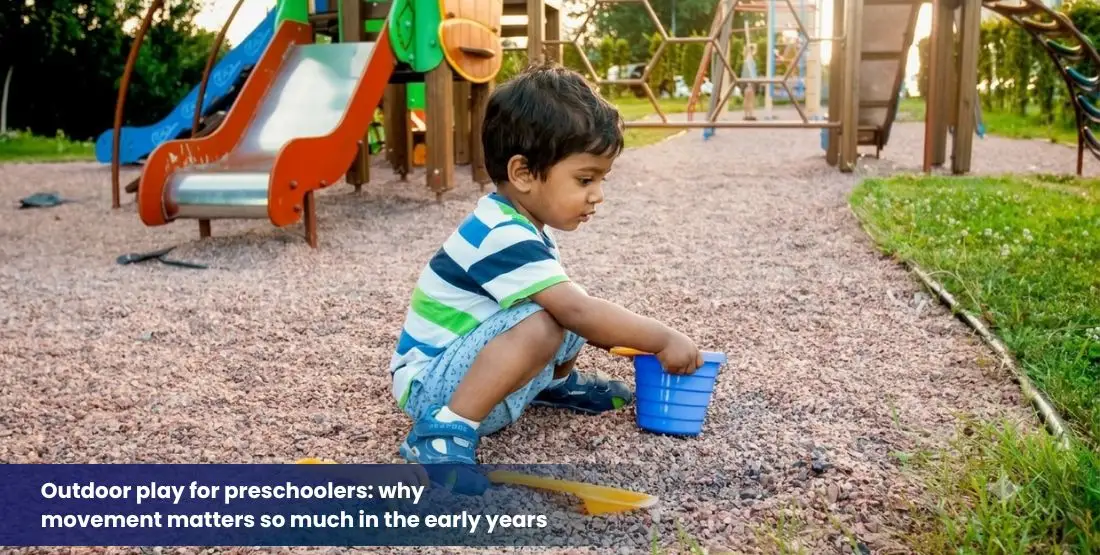
Your child comes home with sand in their shoes, grass stains on their knees and the biggest smile of the day. That is the magic of outdoor play for preschoolers. Running, climbing and exploring in the open air shape a young child’s body and mind in ways no classroom can on its own.
Why does outdoor play for preschoolers matter so much?
Outdoor play gives young children space to move their whole body, test their limits and explore nature with all their senses. It builds strong muscles, balance and coordination, while also helping children make friends, manage feelings and solve small problems on their own.
Inside, children usually sit and work at a table. Outside, they can run, dig and jump freely. Play in general shapes how children learn, as we explain in why play-based learning matters in preschool, and the outdoors adds movement, fresh air and the natural world to the mix.
A child who digs in sand feels its texture, hears birds overhead and notices how wet sand holds its shape. This kind of multi-sensory learning experience is hard to recreate indoors. It also supports sensory-motor learning, where children use what they feel and see to control how they move.
What does outdoor play build in a child?
Outdoor play supports every area of early development. Here is a simple look at what children gain:
Skill area | What it looks like outdoors | Why it matters |
Physical | Running, climbing, balancing, throwing a ball | Builds gross motor skills, strength and coordination |
Sensory | Touching sand, leaves and water; hearing birds | Helps the brain make sense of the world |
Social | Taking turns on the slide, playing tag together | Teaches sharing, patience and teamwork |
Emotional | Trying a higher step, getting up after a fall | Builds confidence and resilience |
Thinking | Building a sand castle, finding a way across | Encourages problem solving and curiosity |
Children who are active outdoors also tend to eat better and sleep more soundly. In our experience, a morning of active play often leads to a calmer, happier afternoon.
How much physical activity does a preschooler need?
Preschool children need a lot of movement throughout the day since short periods of running and dancing add up fast, and excessive sitting—whether in a car seat or in front of a screen—takes away the time that is needed for active play.
Did you know? The World Health Organisation recommends that children between the ages of 3 and 4 should engage in at least 180 minutes each day of different physical activities, including at least 60 minutes of more vigorous play distributed throughout the day.
Is outdoor play safe in Vadodara’s weather?
Yes, with a little planning. Winter is the best season for outdoor play in Vadodara, with mild mornings and pleasant evenings. In the hot months, plan play for early mornings or late evenings, choose shaded spots, offer water often and dress children in light cotton clothes and a cap.
During the monsoon, a short walk after the rain to look at puddles, snails and wet leaves can be just as exciting as a trip to the park.
How can parents encourage outdoor activities for toddlers at home?
You do not need a big garden to raise an active child. Simple, regular habits make the biggest difference:
- Visit a nearby park or your building society play area a few times a week.
- Go on short nature walks and collect leaves, stones or flowers.
- Play ball games, hopscotch or chase in an open space.
- Let your child help water plants or wash a bicycle.
Swapping some screen time for outdoor time is one of the easiest changes a family can make. For rainy or very hot days, try these screen-free activities for children at home to keep little ones moving indoors.
How does Alphakids make outdoor play part of every day?
At Alphakids International, outdoor play for preschoolers is part of how children learn. Our Karelibaug campus has a safe and spacious outdoor play area, and outdoor exploration and sensory learning are built into our curriculum. Music, art and movement are woven into daily lessons, so children stay active even inside the classroom.
Throughout the year, Annual Sports Day, field trips and theme-based special days turn movement into shared experiential learning activities that children remember. The campus is covered by CCTV, and our teachers, trained by our Mumbai head office, keep a close eye on every child during play.
See our outdoor play area for yourself.
Choosing the best preschool in Vadodara means finding a place where children can move, explore and grow. Book a campus visit to our Karelibaug campus or call +91 92279 91016 to see where our little ones run, climb and play every day.
FAQs
Outdoor play builds strong muscles, balance and coordination. It also helps children make friends, manage their feelings, explore nature with all their senses and solve small problems, supporting their overall growth and confidence.
The WHO guidelines state that children between the ages of 3 and 4 should engage in at least 180 minutes of varied physical activity each day, including at least 60 minutes of more energetic play which should be spread out throughout the day.
Yes, with planning. Play in the early morning or evening, choose shaded areas, give water often and dress children in light cotton clothes and a cap. Winter is the best outdoor season in Vadodara.
Visit a nearby park or society play area, go on short nature walks, play ball games and let children help with simple outdoor chores. Regular, small habits matter more than long outings.
Yes. Our Karelibaug campus has a safe and spacious outdoor play area covered by CCTV. Outdoor exploration and sensory learning are part of our curriculum, guided by teachers trained by our Mumbai head office.