





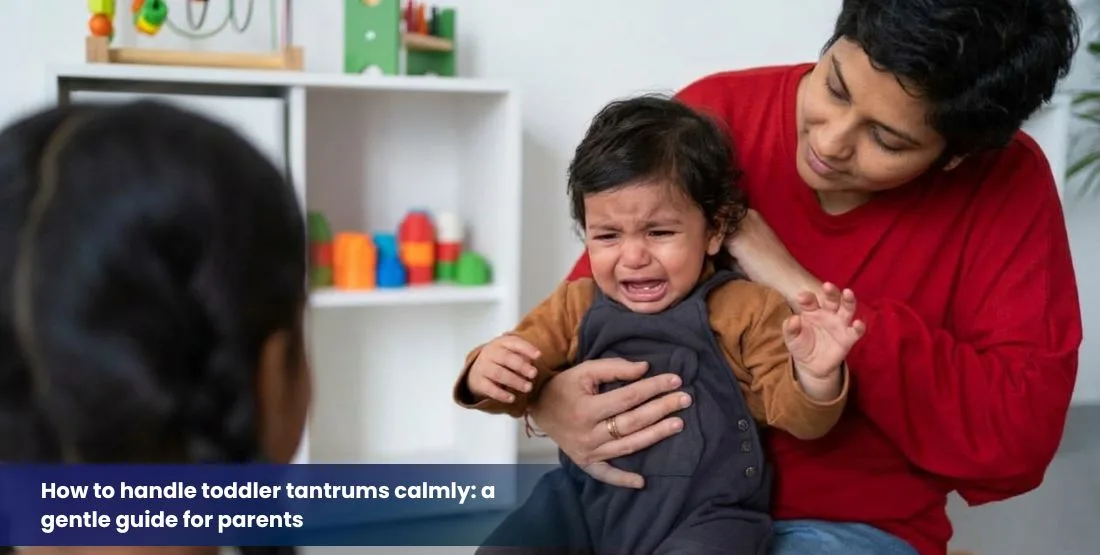
The biscuit broke in half, and now your two year old is face down on the kitchen floor, wailing as if the world has ended. Every parent has been there, often more than once a day. Learning how to handle toddler tantrums calmly starts with one simple idea: your child is having a hard time, not giving you a hard time.
Why do toddlers throw tantrums?
Toddlers throw tantrums because their feelings are bigger than their words. A young child may feel angry or disappointed but cannot yet explain it. When frustration builds and there is no other way out, it spills over as crying, kicking or screaming.
Hunger, a missed nap, leaving the park too soon or a sudden change in routine can tip a toddler over the edge. According to the American Academy of Pediatrics, tantrums happen most between the ages of 1 and 3 and usually get better after that.
What is happening inside a toddler’s brain?
The emotional part of a child’s brain works at full speed from birth. However, the part that controls impulses and calms us down develops slowly through childhood and well into the teenage years. So when a toddler loses control, it usually means the brain’s “brakes” are still being built.
This is why telling a two year old to “calm down” rarely works. They are not choosing to fall apart. Emotional regulation in children is a skill they learn over years, and they learn it best by borrowing calm from the adults around them.
Is it a tantrum or a meltdown?
The two can look alike, but they are different. A tantrum usually has a goal, such as getting a toy or avoiding bedtime, and it often stops once the child sees it is not working. A meltdown happens when a child is completely overwhelmed by tiredness, noise or too much going on. During a meltdown, the child needs comfort and a quiet space more than limits.
In our experience, knowing the difference helps parents choose the right response. Firm, kind boundaries suit a tantrum, while soothing and fewer words suit a meltdown.
How to handle toddler tantrums in the moment
Keep close to your child, remain calm and make sure she or he is safe until the storm has passed. The calm tone that you use helps a toddler understand that strong emotions can be dealt with.
It is best to put off any lectures since a child who is in the middle of a tantrum can’t absorb them.
- First, take a deep breath; the calmness you exhibit will help your child do the same. If you notice your temper rising, then wait before you speak.
- Give the emotion a name. When you say “You’re sad because we’ve left the park”, you are linking feelings with words, and as time goes on your child will begin to use those words as well.
- Keep them safe. Move anything that could hurt them, stay nearby and let the feeling run its course.
- Hold the limit kindly. Stay firm about the rule while keeping your tone gentle. “I know you want more cartoons. The TV is off now.”
- Offer small choices. “Red cup or blue cup?” gives toddlers a sense of control and can stop a tantrum before it begins.
What should parents do after a tantrum?
Once your child is calm, reconnect with a hug, a cuddle or a quiet moment together. This tells them your love has not changed, even after a hard moment. Avoid punishing or shaming the outburst once it is over.
When people are all relaxed, discuss it using simple language. For example, you might feel quite angry when the tower collapses, so the following time you could say, “I need some help”. Books illustrating emotions can also assist toddlers in understanding what had happened.
Can tantrums be prevented?
It is not possible to avoid all tantrums, but a great many can be lessened. Having a little snack before going out, keeping a regular bedtime and giving a warning before changing routines (‘Five more minutes and then we’re going home’) make a big difference. Offer praise when your child waits patiently or uses words rather than crying. While it is important to know how to deal with toddler tantrums, preventing them whenever possible results in a calmer everyday life for the entire family.
What happens if tantrums are met with shouting or giving in?
Shouting and making threats usually cause tantrums to last longer since the child then feels an even greater lack of safety. When parents give in, they teach the child that a meltdown is effective, and so tantrums may occur more frequently. All parents do at times lose their patience, but what matters is the pattern over time.
If children are punished often for being upset, they might stop sharing their feelings and do not understand them. By responding in a calm and consistent manner, trust is built. This help children to cope with their emotions independently as they grow up.
When should parents speak to a paediatrician?
Most tantrums are a normal part of growing up. Still, it is worth talking to your doctor if tantrums become more frequent or intense after age 4, or if your child often hurts themselves or others. Concerns about speech or development are also worth raising early.
How Alphakids supports big feelings
At Alphakids International, emotional growth is part of every day. Our ASTERIA pedagogy develops EQ alongside IQ and SQ, and our I CARE values teach children awareness of their feelings and the resilience to keep trying. You can read more about how we nurture IQ, EQ and SQ in young children.
Our Playgroup offers a gentle first step away from home, where toddlers learn to share, wait their turn and express themselves with words. Teachers trained by our Mumbai head office give personal attention in small groups, and observation based assessment helps them understand each child’s emotional needs. Parents also get updates on their child’s day through our parent app. Wondering if your toddler is ready? These signs your child is ready for preschool can help.
A calm start for little hearts
It’s normal to have strong emotions as you grow up, and every child should have adults who respond to those emotions with patience. If you’re seeking the best preschool in Vadodara, one where emotional development is just as important as academic learning, then we should be glad to have the opportunity to meet you. You can arrange a visit to our Karelibaug campus or give us a call on +91 92279 91016 to meet our teachers and take a look at our classrooms.
FAQs
Toddlers throw tantrums because their feelings are bigger than their words. Tiredness, hunger, frustration or a sudden change in routine can overwhelm a young child who cannot yet explain what they feel.
Remain calm, keep your child safe and describe the emotion using simple words. Don’t shout or give in. When your child has calmed down, give them a hug and then gently talk with them about what took place.
A tantrum is generally caused by a desire for something and usually ends when the child is given some attention or offered a choice. A meltdown occurs when a child feels entirely overwhelmed and requires comfort in order to calm down.
Tantrums are most common between the ages of 1 and 3. They usually become less frequent after age 3 or 4, as children learn more words and better ways to manage their feelings.
Speak to your paediatrician if tantrums become more frequent or intense after age 4, involve your child hurting themselves or others, or come with concerns about speech, sleep or development.